Surfing in Flakstad Beach, Lofoten: A Norway Surf Spot and Travel Guide
Introduction to Surfing Lofoten
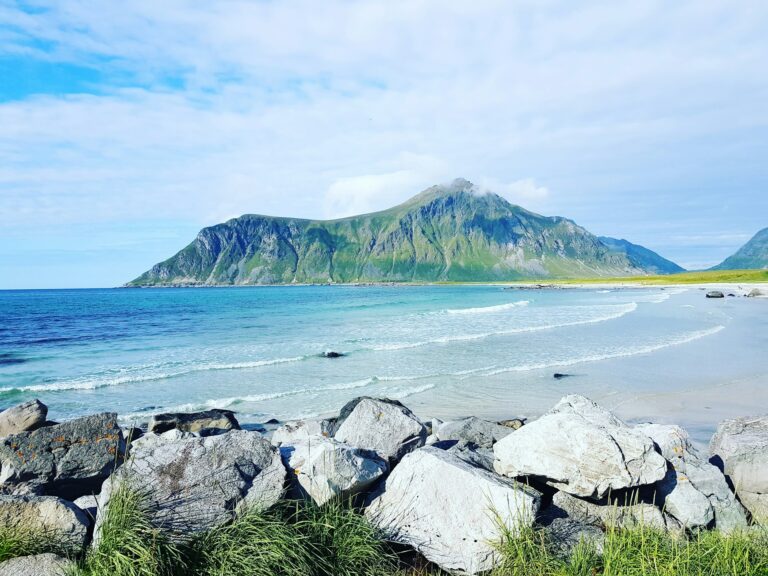
The Lofoten Islands, situated well within the Arctic Circle, offer one of the most visually spectacular and otherworldly surfing experiences on the planet. Defined by jagged granite peaks that rise directly from the turquoise North Atlantic, the archipelago creates a dramatic backdrop of snow-capped mountains and deep fjords.
For surfers, Lofoten is the crown jewel of Arctic surfing, where the Gulf Stream brings surprisingly manageable water temperatures despite the extreme latitude. Surfing in Lofoten, particularly at Flakstad Beach, is a high-energy experience where raw Atlantic swells meet pristine white sands. It is a place of ethereal light, from the 24-hour Midnight Sun of summer to the dancing Northern Lights of winter. Lofoten offers a profound sense of adventure, attracting those who seek to ride quality waves in one of the world’s most majestic and wild environments.
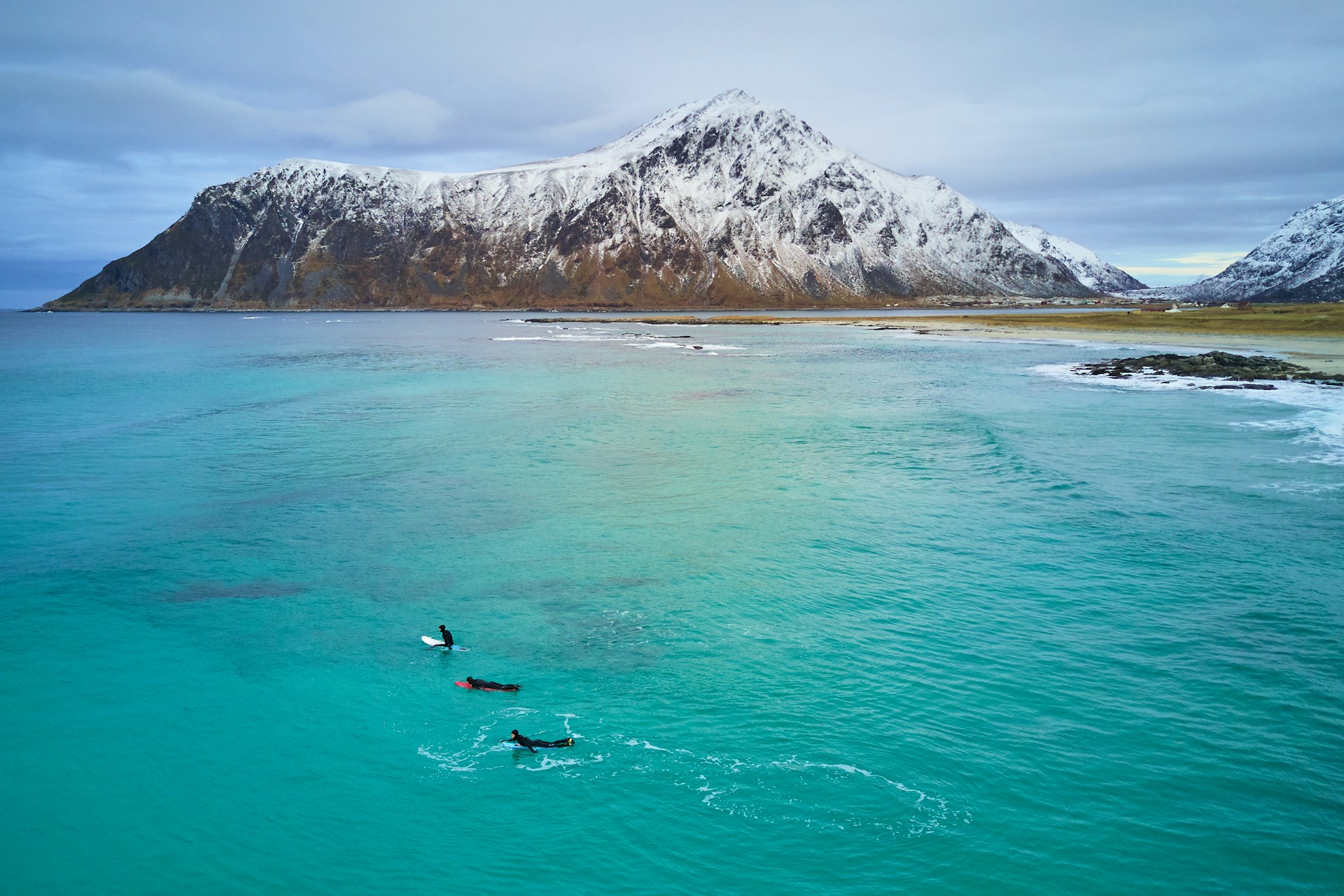
Flakstad Beach with some surfers out in the water searching for waves.
Best Season to Surf Lofoten
- The High Swell Season (Autumn/Winter): September to March. This extended cold-weather window delivers the largest and most consistent ocean energy of the year, making it the prime choice for experienced surfers. Heavy North Sea storms generate frequent, powerful groundswells that light up the beach, though you will have to contend with freezing air and water temperatures, volatile Scandinavian weather, and short daylight windows
- Beginner Recommendation (Summer): June to August. The summer months offer the most forgiving, user-friendly conditions and are ideal for those learning or practicing the basics. Wave sizes are generally much smaller and gentler, the North Sea is at its calmest, and the weather is remarkably mild.
- The Transition Months: April to May & November. These shoulder periods provide a dynamic bridge between seasons, offering a useful combination of decent wave sizes and shifting weather. Late spring brings expanding daylight and slightly milder air alongside lingering winter energy, while late autumn sees the return of larger, more frequent swells just as the summer crowds completely clear out.
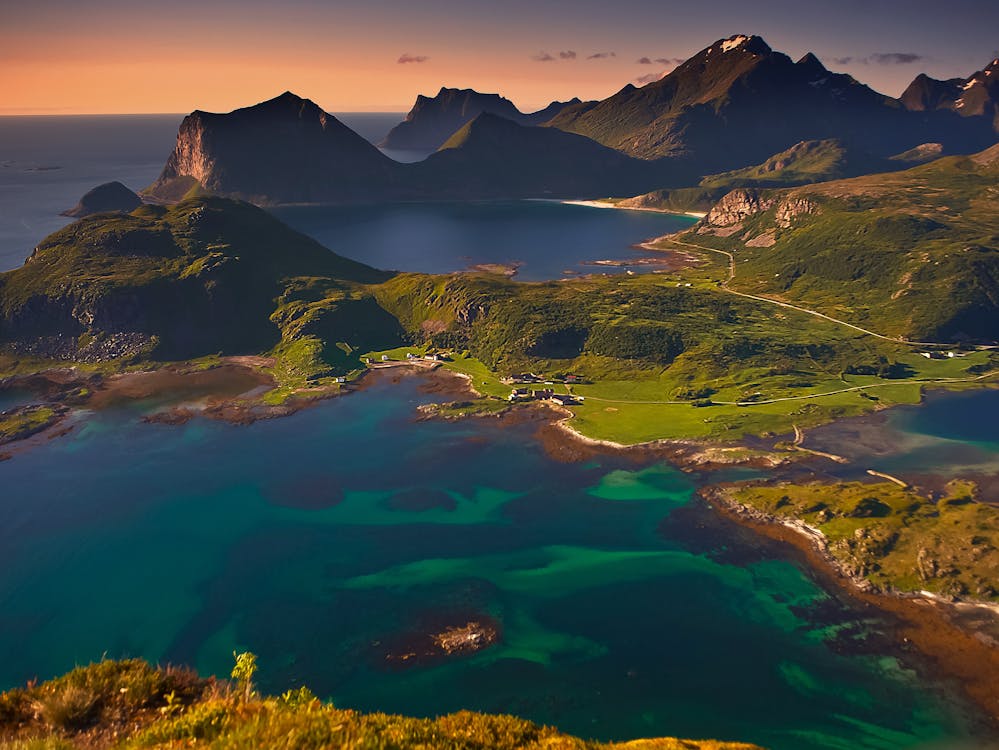
A beautiful scenic overview of the rolling mountains, beaches, and water in Flakstad, Norway.
Surf Spots and Beaches in Lofoten
Flakstad Beach (Skagsanden)
The primary surf action in this part of Lofoten takes place at Flakstad Beach, also known as Skagsanden. This expansive sandy bay is a reliable “swell magnet,” picking up energy from the north and west.
The sandy bottom ensures a safe environment, and the surrounding mountains provide a degree of shelter from certain wind directions. Surfing here feels like being part of a living landscape, where the dark mountain silhouettes contrast sharply against the bright white sand and clear water.
Check out the views, waves, and surfing!
Surf Lessons and Camps
Located right on the beach at Flakstad, Lofoten Beach Camp is the ultimate hub for Arctic surf adventures. This premier school and camp provides top-tier coaching tailored to the unique northern environment, using high-quality cold-water gear to keep you warm and comfortable in the lineup. With its lively social vibe, convenient on-site accommodations, and an unbeatable location steps from the water, it offers an expert, seamless entry to the waves for travelers looking to experience the wild beauty of the Lofoten archipelago.
Other Things to Do in Lofoten
- Hiking Reinebringen: Climb the famous stairs for one of the most iconic panoramic views in Norway, overlooking the fishing village of Reine and the surrounding fjords.
- Northern Lights Hunting: During the winter months, head to the darker beaches to witness the Aurora Borealis dancing across the sky.
- Midnight Sun Exploration: Experience the surreal 24-hour daylight of summer, perfect for late-night hikes or sessions in the water.
- Viking Museum (Lofotr): Visit the reconstructed Viking chieftain’s longhouse in Borg to learn about the ancient history of the islands.
- Traditional Fishing Villages: Explore the picturesque Rorbuer (red fisherman’s cabins) in villages like Å and Henningsvær, and sample local stockfish.
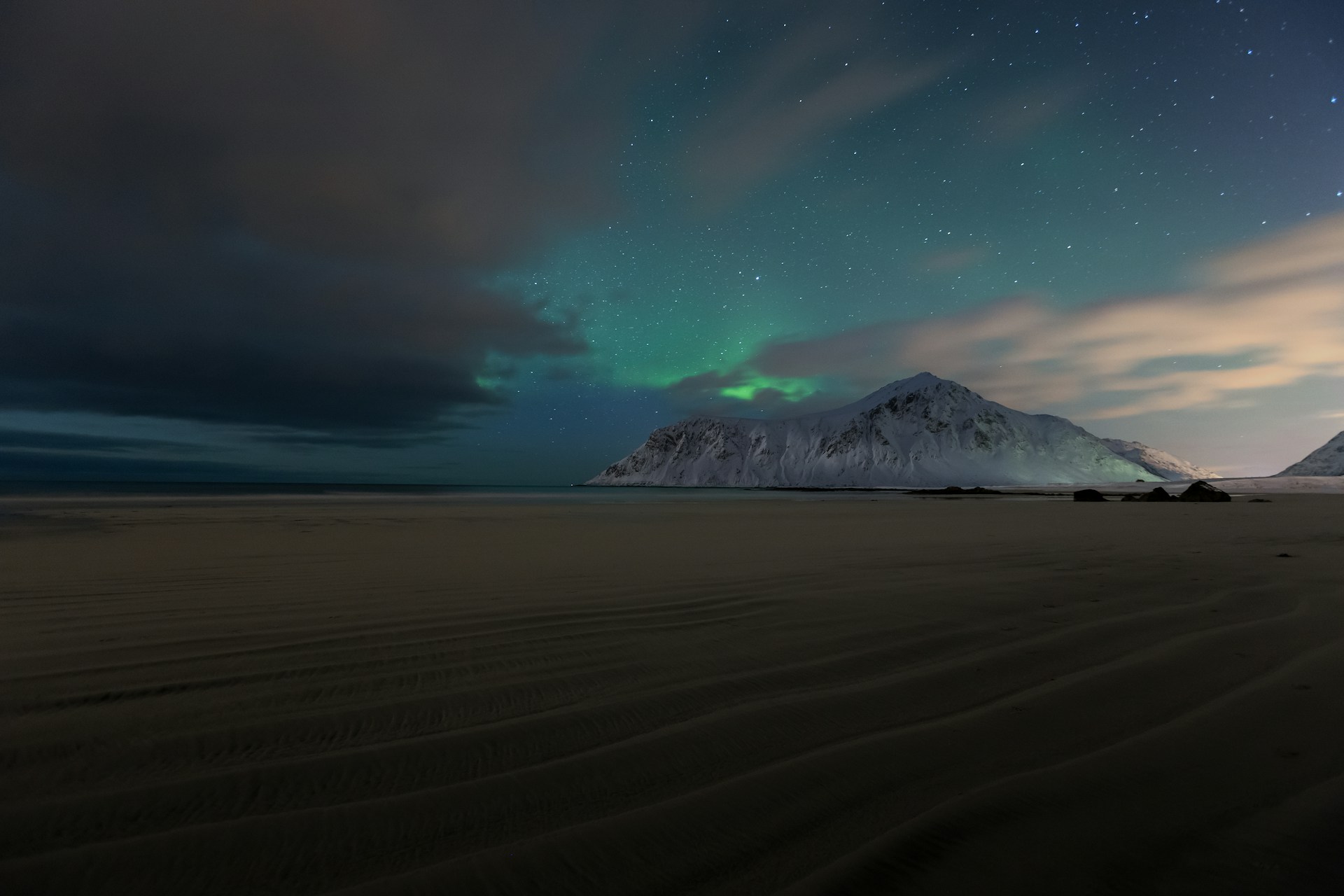
The midnight views with some borealis at Flakstad.
Conclusion on Surfing Lofoten
Blending reliable ocean swells with the jaw-dropping grandeur of dramatic mountain islands, Lofoten is a pinnacle destination for cold-water surfing. The dependable sandbanks at Flakstad Beach offer remarkably consistent setups, making it a must-visit for travelers looking for quality waves in a raw, authentic Nordic environment.
From catching clean morning peaks under jagged cliffs to relaxing on the snow-fringed sand post-session under the aurora, it perfectly embodies the wild, adventurous spirit of Arctic exploration.
FAQ: Surf Travel to Lofoten
Is Lofoten suitable for beginners?
Yes, despite its Arctic location, the sandy bottom at Flakstad and the professional coaching at Lofoten Beach Camp make it a safe and accessible place for beginners, especially during the summer.
What is the water temperature?
In summer, the water ranges from 10°C to 14°C (50-57°F). In winter, it drops to 4°C to 6°C (39-43°F). A high-quality 5/4mm or 6/5mm wetsuit with a hood, boots, and gloves is essential year-round.
How do I get there?
Lofoten is accessible by flight to Leknes or Svolvær via Bodø. You can also take a ferry from Bodø to Moskenes. A rental car is highly recommended for exploring the different islands and surf spots.
Is the beach crowded?
While Lofoten is a world-famous destination, the lineup at Flakstad remains friendly. The sheer distance and effort required to get here naturally limit the number of surfers in the water.
Can I surf at low tide?
Conditions at Flakstad are tide-dependent. Generally, the mid-tide to high tide provides the best shape for the sandbanks, as low tide can occasionally cause the waves to close out.
Are there other locations to do a Surf Camp or take a lesson in Northern Europe?
Check out our Surfing in Norway Travel Guide for more information on other top locations along the Norwegian coastline.