Surfing in Western Sahara – Best Surf Spots, Beaches, and Schools
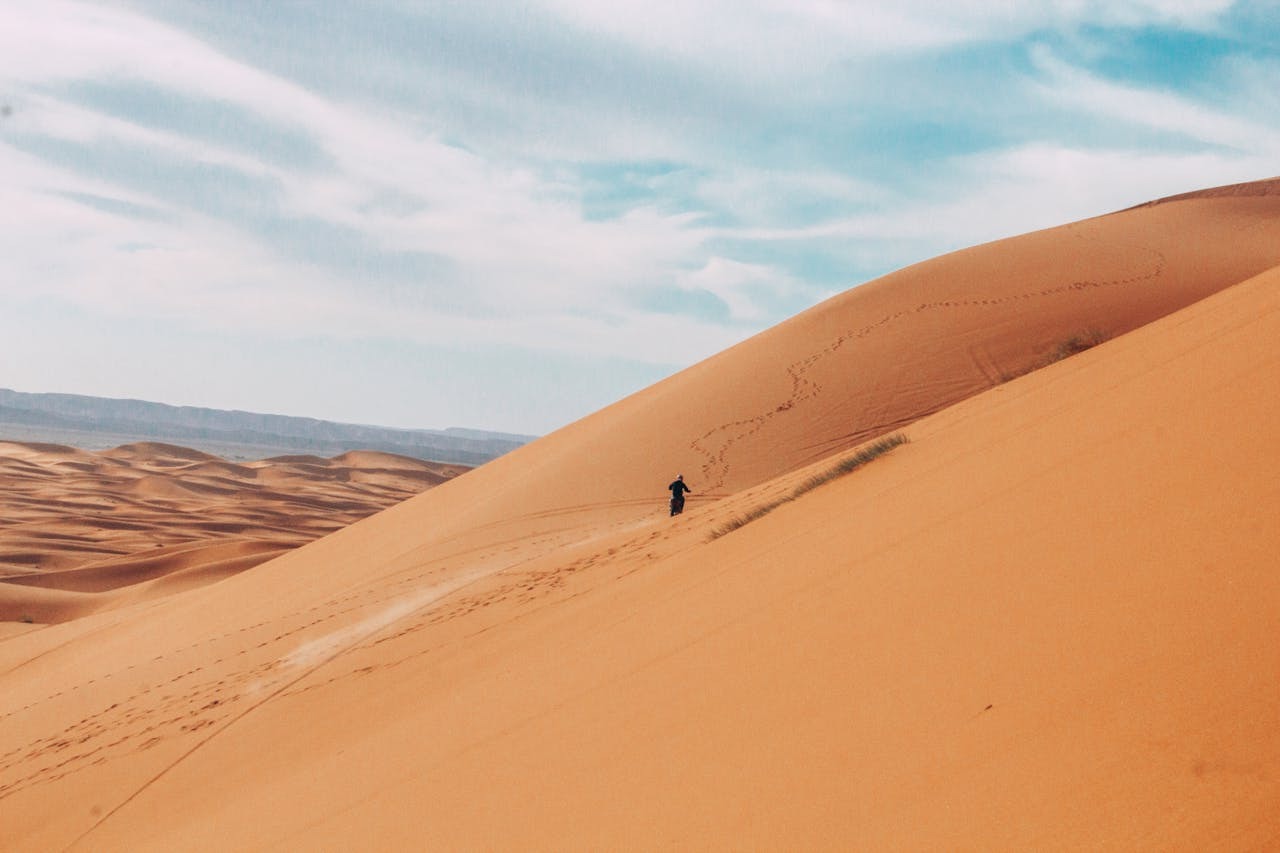
Western Sahara is an up and coming surf location with some waves that potentially rival Morocco. If you want to get a feel for the location, check out this article, and catch the itch for more with this recent video about surfing in Western Sahara:
A beautiful Youtube film showcasing Western Sahara and its fantastic surf scene. Produced and created by Aurelie Guerin and Paul Duvignau.
Table of Contents
- Introduction to Surfing in Western Sahara
- History of Surfing in Western Sahara
- Surf Spots in Western Sahara
- Best Season to Surf
- Surf Schools and Surf Camps
- Concluding Notes on Surfing
Introduction to Surfing in Western Sahara
Western Sahara is right below one of the most popular surf destinations in the world, Morocco. Western Sahara is a vast, long stretch of sand where the Sahara Desert literally falls into the Atlantic. The coastline stretches 1,110 km, or 690 miles. That’s a long stretch of beaches, cliffs, and so on to surf. This long stretch of coastline line is filled with beach breaks, point breaks, sandbars, and a hidden reef or two. While the waves are something to be admired, you don’t come here for a party or a scene, you come for the solitude and a chance to score that splendid session.
Before we hop into some of the finer details, such as the surf spots, beaches, surf schools and camps, its important to cover some of the general topics of travel advisories, and expected trip costs for these regions.
Travel Advisories
There are a handful of things to know about traveling to Western Sahara before you choose it as your next location for a surf safari. Western Sahara is supposedly mellow but has an odd undertone due to its status as a disputed territory. Due to this dispute and the creation of it, it must be known that the presence of landmines is found within a distance from the Berm front. Luckily, the Berm front is far off the coastline, making surf expeditions safe, although it is a precaution in the case of non-surf side trips.
Expected Trip Costs
Cost-wise, it’s cheap if you live like a local, but the logistics of a 4×4, which you will be renting, will add up since everything is so far apart. It’s a raw, stripped-back experience. No hype, just a lot of sand and the chance to surf perfect, empty points until your shoulders give out. That is the ultimate search for a perfect session, but the upfront costs will be in bulk, while smaller expenditures, such as dinner, will be low compared to European or American prices.
History of Surfing in Western Sahara
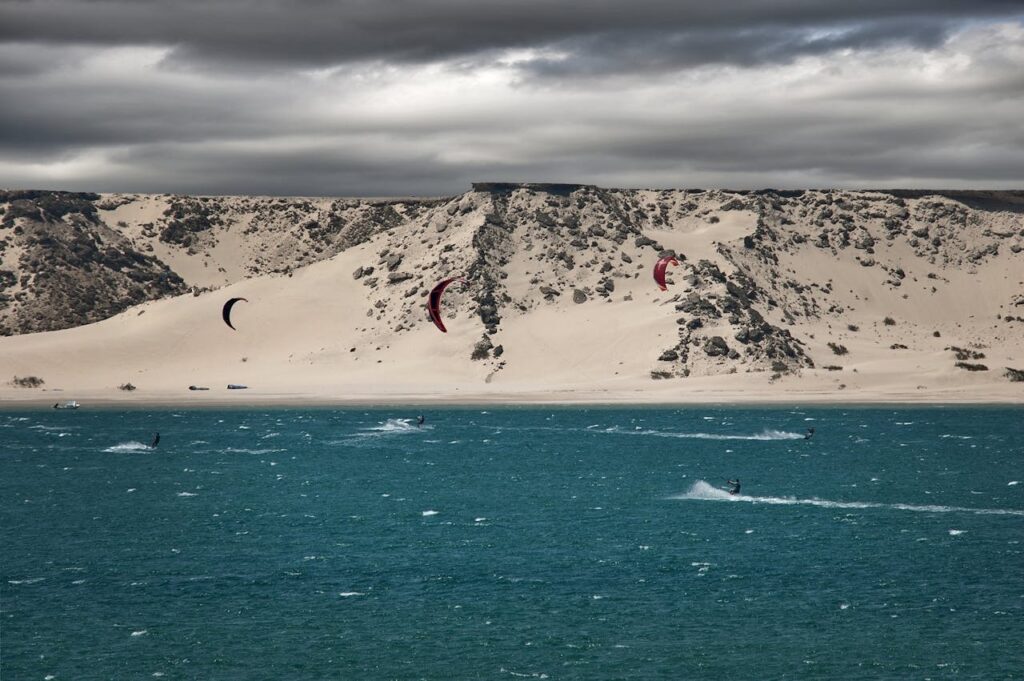
Some kite surfers enjoying the weather, that is wind in the north of Western Sahara.
Surfing in Western Sahara doesn’t have deep roots like the history of Hawaii or so for surfing. It’s a history defined by isolation and geopolitics. For decades, the only people on the water were Sahrawi fishermen or Spanish colonists. While the 60s saw surfers pushing south from Morocco. Although, this push was hindered from the conflict over the territory in the 70s, which turned the coast into a militarized zone, keeping lineups empty for years.
Years pass, and wars and conflicts fade. Then the real shift happens, for Western Sahara it was in the early 2000s when Dakhla became a global hub for kitesurfing. As wind-seekers arrived, they rediscovered the massive, empty point breaks on the Atlantic side. Today, the scene is at a point a little past the pioneer phase. Today it marks a perfect opportunity for catch some waves, which do not have too crowded of lineups, due to its non-popularization yet. It remains one of the few places left where history is being written in real-time by anyone willing to drive into the desert. Search it up on Youtube and you won’t find as many videos as you would suspect. Atleast, in comparison to Morocco that is.
Surf Spots In Western Sahara
Western Sahara coastline is mainly built up of either sand point breaks or beach breaks. Let’s break down the list of locations going from southern regions to northern. The breaks are broken in two regions, the northern region of Saguia el-Hamra, and the southern region of Rio de Oro. Both regions have a fine amount of waves, but some are perfect for those looking to progress their skills to an intermediate level, and or just begin their surfing journey.
Please note that these regions are under dispute, as of the writing of this article, and information seems to be vague.
Best Beginner Wave (Our Recommended Wave)
West Point
A point break in the main area of Dakhla located on Oum El Bouir. This is the main wave situated around Dahkla, and what Western Sahara is known for. Here you will fine a beautiful sandy bottom with a rolling right point break. The wave is surrounded by a variety of surf schools, and a few surf camps that we will dive into later on in the article. As mentioned this wave, is not only perfect for learning to surf, but also advancing to higher levels in surfing. Check out the video for more proof in the pudding;
Rio De Oro Region
The Rio de Oro Region has a few discussed locations for waves, and some videos showcasing them online.
Aarich
Another beautiful wave, that looks as if it has the potential to become a perfect sandy bottom point break. This wave is situated in a fishing center that makes it a friendly atmosphere for getting out to the waves. Check, this video for another preview:
The recommended spots to check out are: Plage al Mahariyat, Lagtoua, Candelaria, Garitas, Patos, Untouchables, Chhouoha, Ponta Negra, Playa de la Sistia, Playa de los Arcipreses, Foum El Bouir, Pointe de L’Or, Tarf Entayreft, Tarf Noa, Msdoud, Foum el Pied, La Corniche,
Saguia el-Hamra Region
As for other surf spots and beaches in the Saguia el-Hamra region, check out: Al Marsa, Laayoune Plage, Zbarat, Playa del Medano
Best Season to Surf
For Beginners
The best season for beginner surfers in Western Sahara is the shoulder seasons, per usual. That is because it brings warmer waters, mellower waves as well as wind. The recommended shoulder season for Western Sahara is September to October, or April through May.
Best Season Overall
The best season for waves in Western Sahara is certainly November to March. Winter swells bring power and size, and the wind is more favorable. The shoulder season from September to October, and including April, also offers a fantastic opportunity to catch some waves with less individuals surfing there. It is important to note that the trade winds do turn on in Western Sahara from 10:00AM onward.
Surf Schools and Surf Camps in Western Sahara
There are a handful of surf schools, that typically offer some accommodation and surf camp options, feel free to peruse these that have a notable reputation if your interested in going. All of them are located near Dahka which is quite easy to access.
Surf School #1: Ocean Vagabond Essaouira
Surf School #2: Salty Joy
Surf School #3: ExcelSurf Dakhla
Surf School #4: YasSurf Dakhla
Concluding Notes on Surfing in Western Sahara
Overall it seems that Western Sahara has a fantastic potential for surfing expeditions, and the opportunity to score some unriden and unpopular waves, is something that is truly possible. As a recommendation, it highly recommended for a solid session.