Surfing in Hvide Sande, Denmark: Best Lessons, Surf Spots, and Travel Guide
Introduction to Surfing Hvide Sande
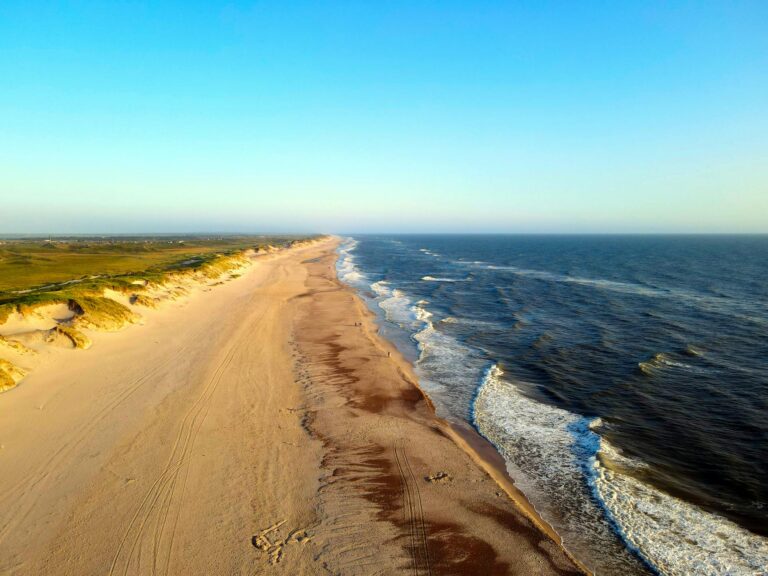
Hvide Sande is a unique and rugged fishing town located on the narrow strip of land that separates the North Sea from the Ringkøbing Fjord. This geographical positioning makes it a premier destination for water sports in Northern Europe, offering a rare “best of both worlds” scenario. To the west, the raw power of the North Sea creates consistent swells and powerful beach breaks.
Surfing in Hvide Sande is characterized by its wide, white sandy beaches and the presence of massive harbor piers that help groom the North Sea energy into clean, workable waves. It is a place where the wild beauty of the Danish west coast meets a modern, professional surf infrastructure, attracting those who seek adventure in a crisp, natural, and unpretentious environment.
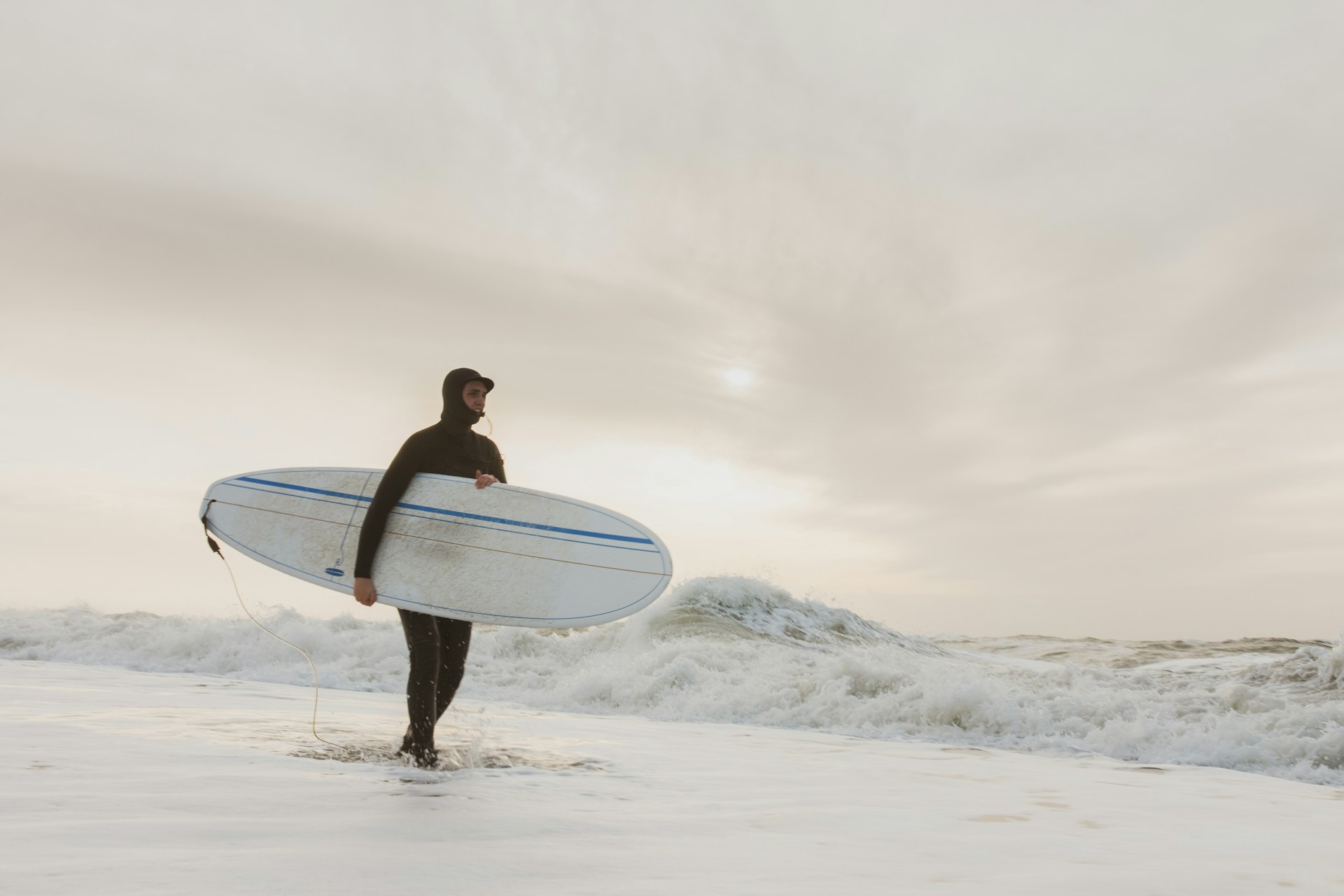
A surfer walking along the beach in Hvide Sande.
Best Season to Surf Hvide Sande
- The High Swell Season – Surf Recommendation: September to March. This period experiences the strongest North Sea energy. The offshore winds are more common, though the water and air temperatures require high-quality winter gear.
- Beginner Recommendation – The Summer Season: June to August. This is the ideal time for manageable waves and warmer conditions. The waves are generally smaller and softer, providing an excellent environment for first-timers and intermediate surfers to practice on the long sandy stretches.
- General Recommendation – The Transition Months: April, May, and October. These months provide a useful combination of decent wave frequency and more pleasant weather. You can often experience clean groundswells while enjoying the first or last sunny days of the season.
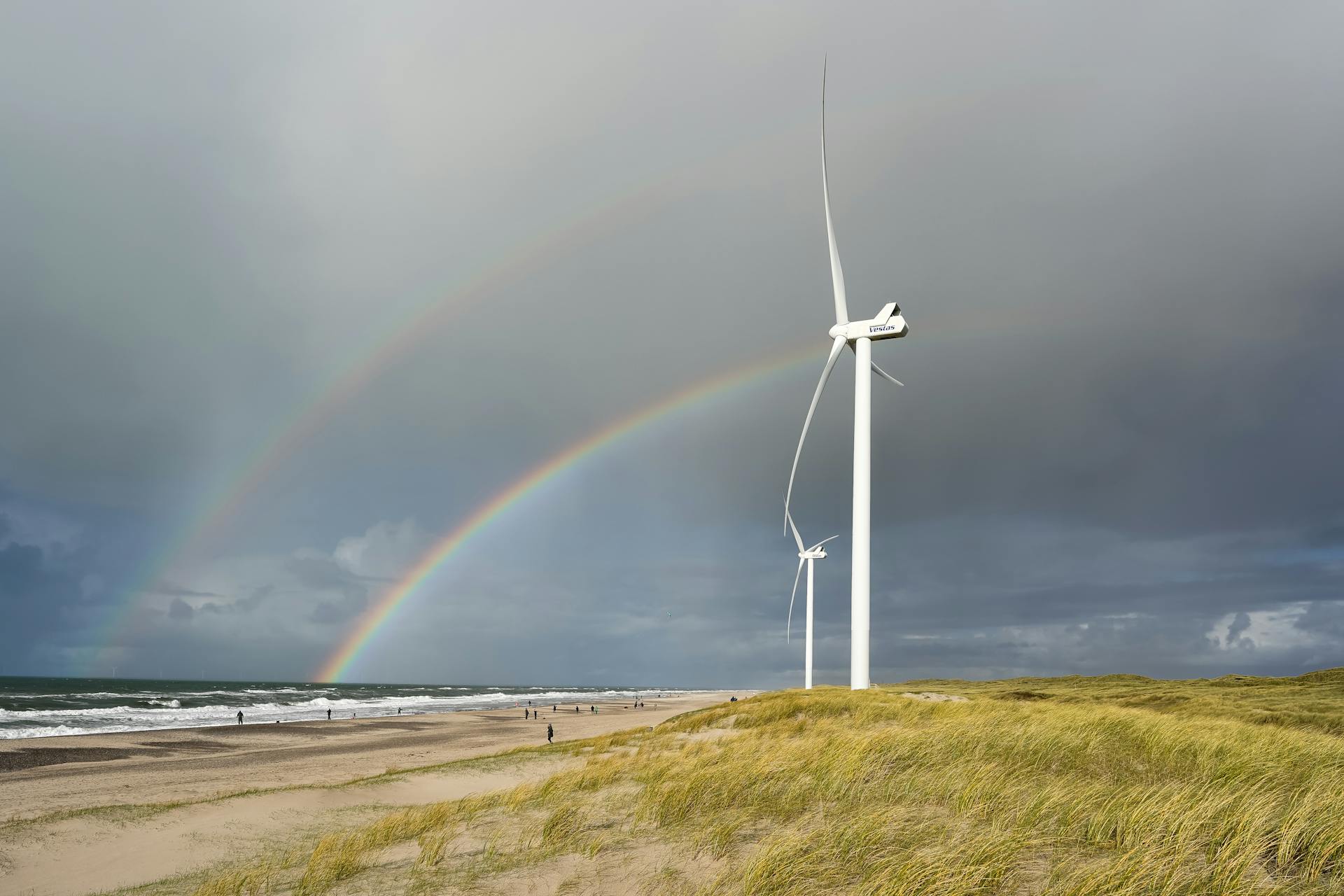
A double rainbow and some windmills right across the beach of Hvide Sande.
Surf Spots and Beaches in Hvide Sande
Hvide Sande Beach
The primary surf action in Hvide Sande takes place along the expansive sandy beaches, particularly near the large harbor piers. These piers act as stabilizers for the sandbanks and provide protection from the dominant winds, helping to organize the North Sea swells into cleaner peaks.
Some fantastic breaking waves across the beach of Hvide Sande.
Surf Lessons and Camps
Westwind is the central hub for surf culture in Hvide Sande, operating multiple locations that cater to both the sea and the fjord. Their surf school is dedicated to providing high-quality, professional coaching for surfers of all levels. Their team of certified instructors emphasizes safety, technical progression, and a deep understanding of the local North Sea conditions.
With top-tier rental equipment and a structured approach to teaching, Westwind provides an expert and welcoming gateway to the waves. Whether you are catching your first wave on the sandy beach or looking to refine your technique in the powerful pier peaks, Westwind offers a supportive environment designed to help you progress quickly while enjoying the unique spirit of Danish surf travel.
Other Things to Do in Hvide Sande
- Lyngvig Lighthouse: Climb the 228 steps of this iconic lighthouse for breathtaking panoramic views of the North Sea, the dunes, and the Ringkøbing Fjord.
- Hvide Sande Fish Auction: Experience a piece of local culture at the regular fish auctions where you can witness the bustling trade of the daily catch.
- Abelines Gaard: Visit this historic dune farm to learn about the traditional life of the west coast and the history of shipwrecks in the area.
- Biking the Fjordside: Explore the extensive network of cycling paths that wind through the dunes and along the calm shores of the Ringkøbing Fjord.
- Tyskerhavnen: Walk through this charming old fjord harbor to see the small fishing sheds and soak in the authentic, local atmosphere.
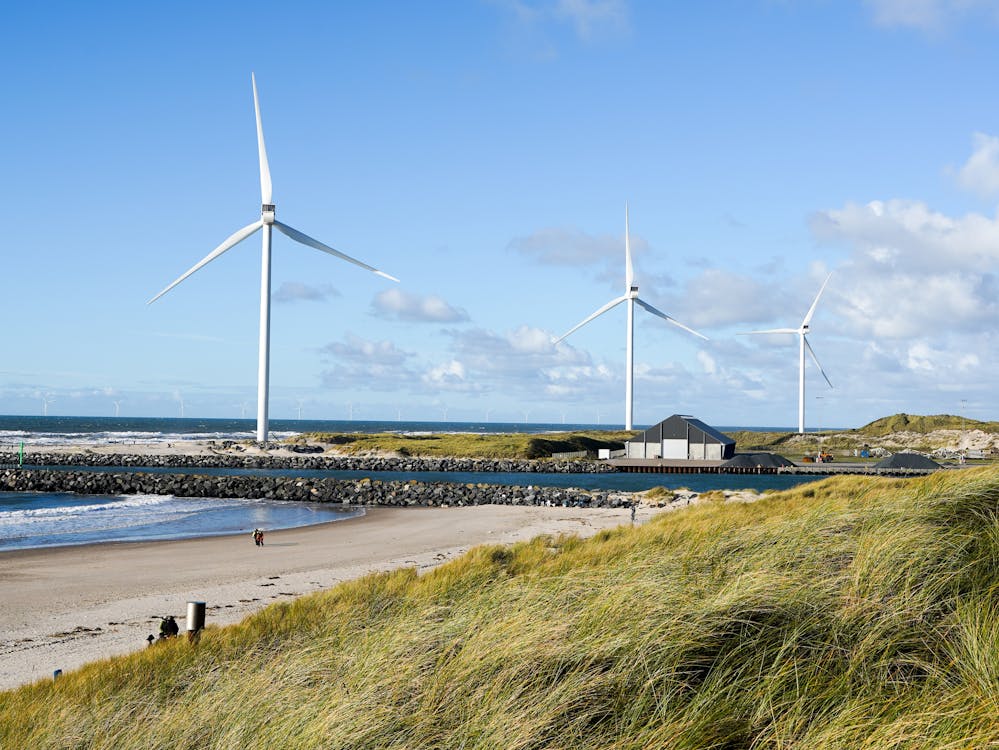
Some windmills and the beach in Hvide Sande.
Conclusion on Surfing Hvide Sande
At Hvide Sande, the raw, unruly energy of the North Sea is sculpted into clean peaks by the town’s iconic harbor piers, creating a brilliant intersection of human engineering and wild coastal nature. This unique setup turns a rugged stretch of the Jutland coast into a reliable canvas for surfers who care more about quality lines than commercial hype.
To paddle out into the shadow of the stone jetties at dawn, and later wander the endless, windswept sand dunes, is to experience a minimalist, purely functional side of Scandinavian surf travel that stays with you long after you pack up your gear.
FAQ: Surf Travel to Hvide Sande
Is Hvide Sande suitable for beginners?
Yes, the sandy bottom and during the calmer summer months.
What is the water temperature?
In summer, the water ranges from 16°C to 19°C (61-66°F). In winter, it can drop to 2°C (36°F). A 3/2mm or 4/3mm wetsuit is ideal for the shoulder seasons, while a thick 5/4mm or 6/5mm with boots, gloves, and a hood is required for winter groundswells.
How do I get there?
Hvide Sande is most easily reached by car. It is approximately a 1.5-hour drive from Billund Airport and 3.5 hours from Copenhagen. There are also bus connections from the nearby town of Ringkøbing.
Is the beach crowded?
While Hvide Sande is a popular destination, the vastness of the coastline means the lineup rarely feels crowded. Surfers can almost always find a quiet peak by walking a short distance from the main access points.
Can I surf at low tide?
Tidal movement in the North Sea around Denmark is relatively small, so surfing is less tide-dependent here than in the UK or France. However, the shape of the sandbanks can still be influenced by the tide, so checking local reports is always recommended.
Are there other locations to do a surf camp or take a lesson in Denmark?
Check out our Surfing in Denmark Travel Guide if you’re interested in checking out other surfing locations along the Danish coast.