Surfing in Wangerooge, Germany: Surf Travel Guide
Introduction to Surfing Wangerooge
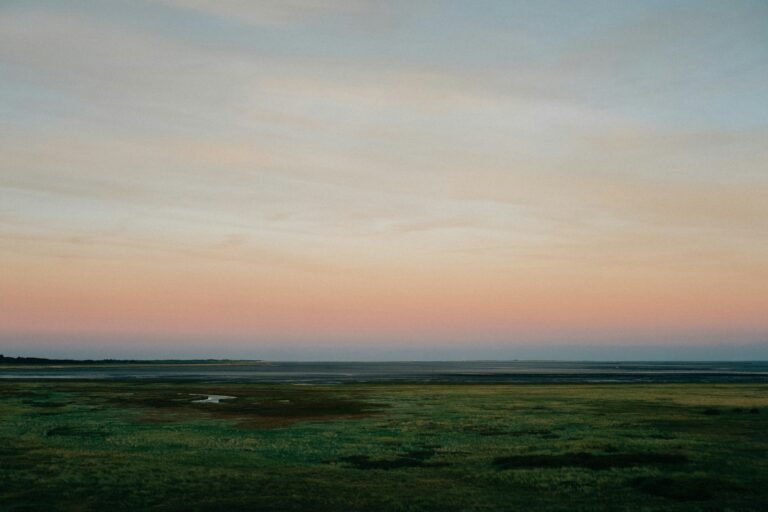
Wangerooge is the easternmost of the inhabited East Frisian Islands, a car-free sanctuary where the rhythm of life is dictated by the tides and the wind. As a Lower Saxony Wadden Sea National Park, the island offers a rare sense of tranquility and a pristine natural environment. For surfers, Wangerooge benefits from its exposed position in the German Bight. The island’s north-facing coastline catches North Sea swells that are often cleaner and more organized than those reaching the mainland.
Surfing in Wangerooge is an immersive, elemental experience; without the noise of cars, the only sounds are the crashing waves and the calls of migratory birds. It is a place where the wide sandy beaches and shifting sandbanks provide a playground for those seeking a peaceful yet adventurous island surf escape.
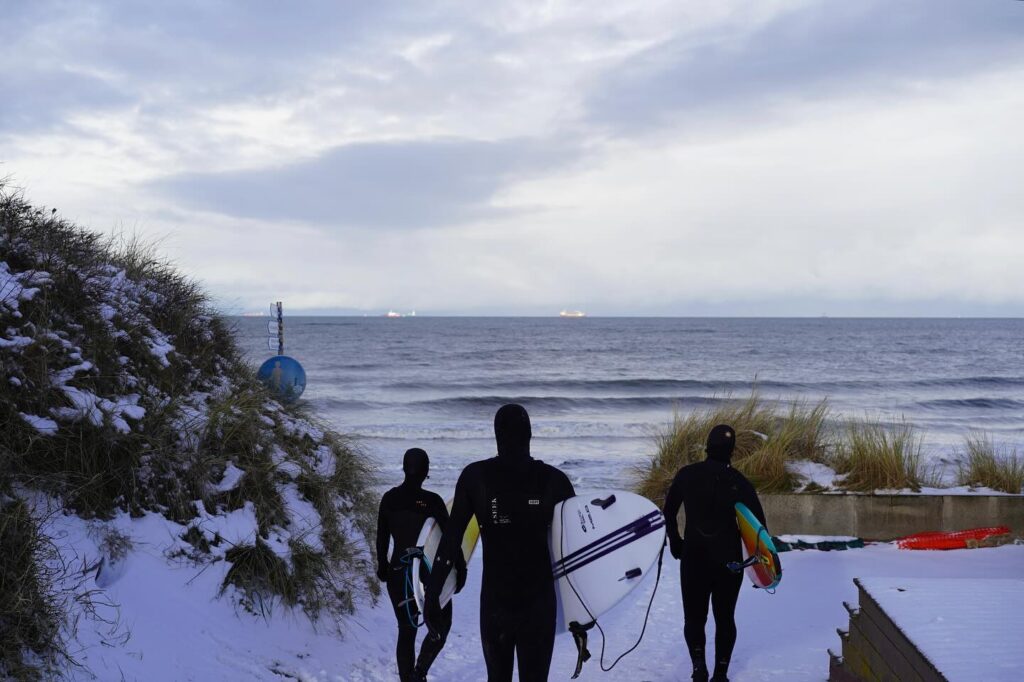
A dedicated group of locals from Wangerooge Surfschule diving in during the winter months.
Best Season to Surf Wangerooge
- The High Swell Season – Winter: September to March. This period experiences the strongest North Sea energy. More swell, but conditions are also more unpredicatable. Water can be cold making it not the best option for beginners.
- Beginner Recommendation – The Summer Season: June to August. The waves are generally smaller and softer, providing an excellent environment for first-timers and intermediate surfers to practice on the long sandy stretches. Although summertime means waves may be nonexistent!
- General Recommendation – The Transition Months: April, May, and October. These months provide a useful combination of decent wave frequency and more pleasant weather. You can often experience clean groundswells while enjoying the first or last sunny days of the season.
Surf Spots and Beaches in Wangerooge
Wangerooge Beach
The primary surfing area on Wangerooge is located along the expansive northern beach, where the island meets the open North Sea. The spot is characterized by reliable sandbanks that shift with the tides, creating a variety of left and right peaks, although it is typically mushy.
Because Wangerooge is an island, the waves often have more structure and “push” than mainland beach breaks. The sandy bottom ensures a safe environment for all levels, while the car-free nature of the island means the beach feels vast and undisturbed.
Just a little video showcasing the beach and some waves.
Surf Lessons and Camps
Surfschule Wangerooge is the central hub for wave riding on the island, dedicated to sharing the thrill of the North Sea in a safe and professional environment. Located directly on the main beach, the school offers a wide range of lessons and courses for all ages and skill levels.
Their team of certified instructors emphasizes safety, ocean awareness, and technical progression, ensuring that every student understands the unique tidal dynamics of the Wadden Sea. With high-quality rental equipment and a supportive atmosphere, Surfschule Wangerooge provides an expert and welcoming gateway to the waves, perfectly capturing the active and free-spirited essence of island life.
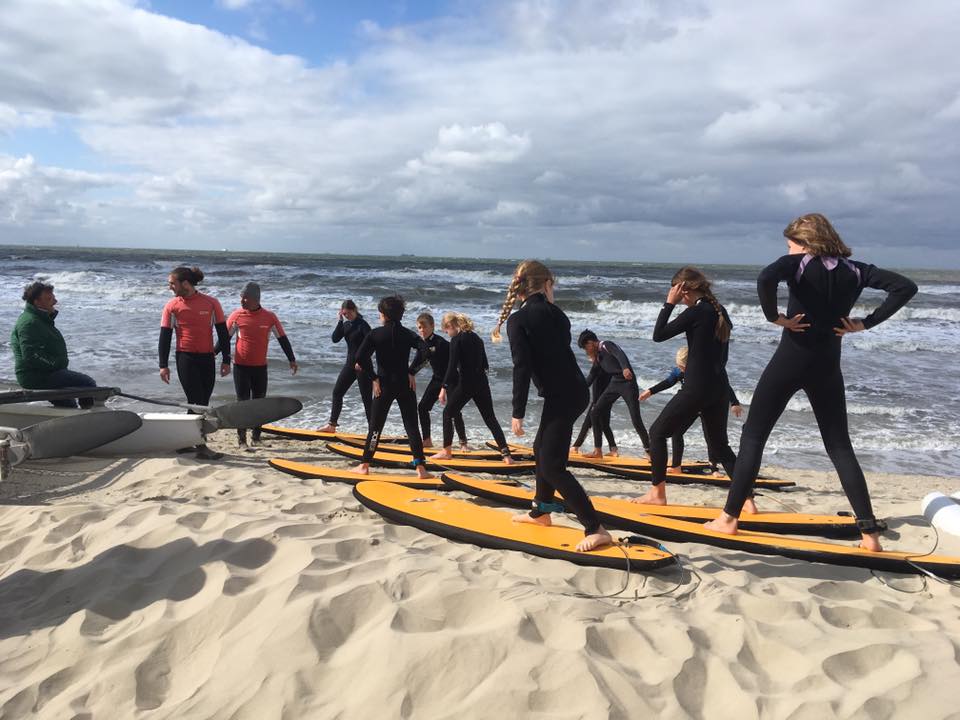
A group of adventurous “groms” tackling their first sessions with Wangerooge Surfschule.
Other Things to Do in Wangerooge
- The Old Lighthouse: Climb to the top of the island’s historic lighthouse for panoramic views of the entire island, the Wadden Sea, and the neighboring coast.
- Island Railway: Enjoy a nostalgic ride on the narrow-gauge island train that takes visitors from the ferry pier through the salt marshes to the village.
- National Park House: Visit the interactive exhibitions to learn about the unique flora and fauna of the Wadden Sea UNESCO World Heritage site.
- Island Cycling: Rent a bike to explore the 18 kilometers of paths that wind through the dunes and along the dikes of this car-free paradise.
- Thalasso Walks: Experience the healing power of the North Sea air and water on a guided walk along the shoreline, a tradition for which the island is famous.
Conclusion on Surfing Wangerooge
Wangerooge offers a quintessential German surf experience, balancing consistent island wave energy with the profound peace of a car-free nature reserve. The reliability of the sandbanks at the main beach and the professional, community-focused expertise of Surfschule Wangerooge make it a premier destination for those seeking quality waves in a serene and authentic setting.
Whether you are carving through a clean morning swell or enjoying the absolute silence of the dunes after a long session, Wangerooge provides a profound connection to the sea and the adventurous spirit of North Sea surf travel.
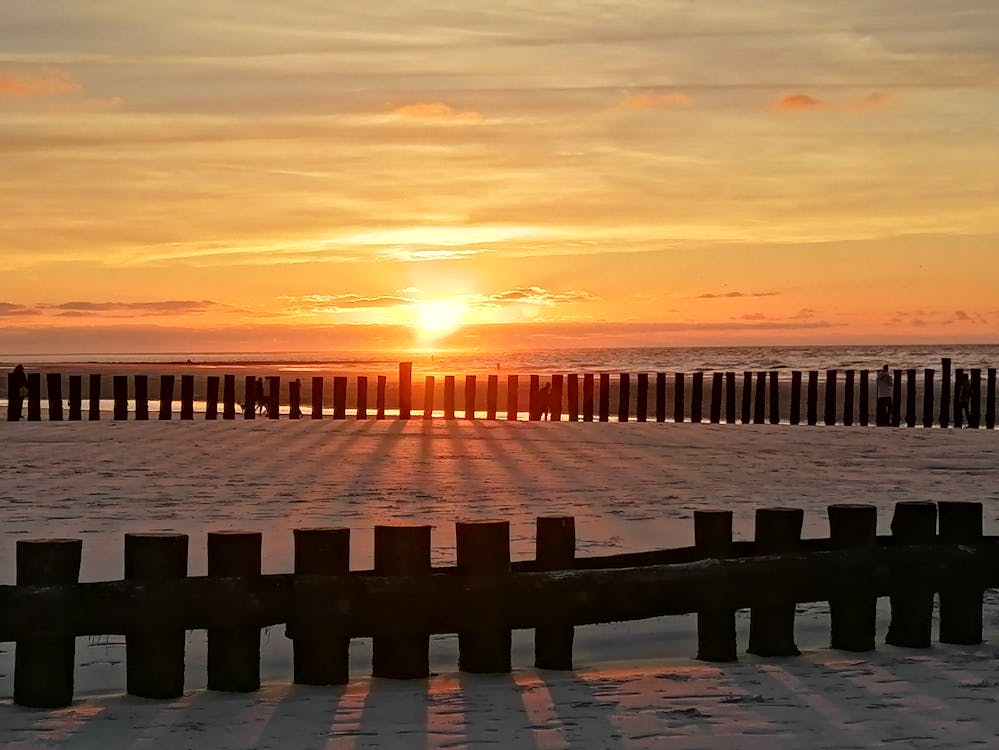
A typical sunset over Wangerooge, Germany.
FAQ: Surf Travel to Wangerooge
Is Wangerooge suitable for beginners?
Yes, the sandy bottom and the professional coaching at Surfschule Wangerooge make it an excellent and safe place for beginners to learn, particularly during the milder summer months.
What is the water temperature?
In summer, the water ranges from 17°C to 20°C (63-68°F). In winter, it can drop to 4°C (39°F). A 3/2mm or 4/3mm wetsuit is ideal for the shoulder seasons, while a thick 5/4mm with boots, gloves, and a hood is required for winter groundswells.
How do I get there?
Wangerooge is reached by a ferry from the harbor of Harlesiel. The ferry schedule is tide-dependent, so it is essential to check departure times in advance. Harlesiel is easily accessible by car or bus from major German cities.
Is the beach crowded?
While the beach near the village can be popular in summer, Wangerooge’s coastline is expansive, and as a car-free island, it never feels as crowded as mainland resorts, offering plenty of space in the lineup.
Can I surf at low tide?
Conditions in Wangerooge are tide-dependent. Generally, the incoming mid-tide to high tide provides the best shapes for the sandbanks, as low tide can often cause the waves to break too far out on the sandbars.
Are there other locations to do a Surf Camp or take a lesson in Germany?
Check out our Surfing in Germany Travel Guide for more information on other top locations along the German coastline.