Surfing in Pavones, Costa Rica: Surf Spots, Camp, and Travel Guide
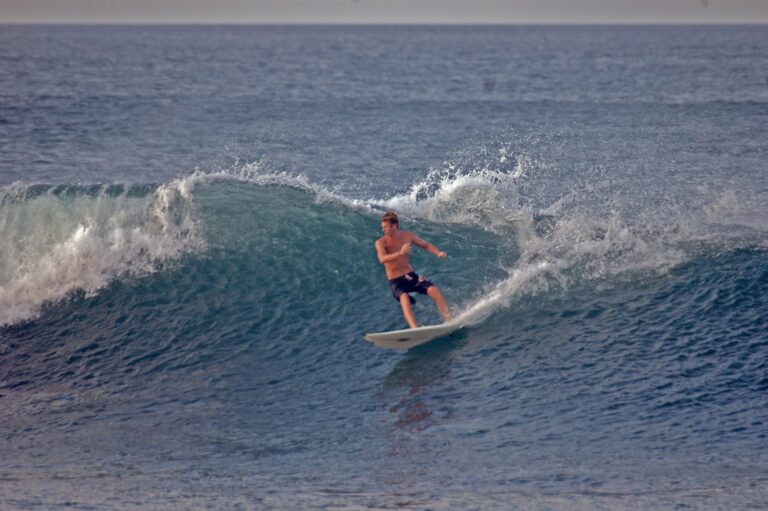
Pavones doesn’t need any introduction besides, showing a beautiful clip. Surfing in Pavones, Costa Rica, is an experience in itself, and this guide will show you some nearby popular surf spots, alongside being a surf camp and travel guide. Get hyped though;
Introduction to Surfing in Pavones
Welcome to the land of spaghetti legs. Pavones is legendary for hosting the second-longest left point break on the planet. Located in the deep south of Costa Rica, right on the edge of the Golfo Dulce, it is a remote sanctuary where the jungle is loud and the waves are even louder. You come here for one thing: the chance to ride a single wave for over a kilometer.
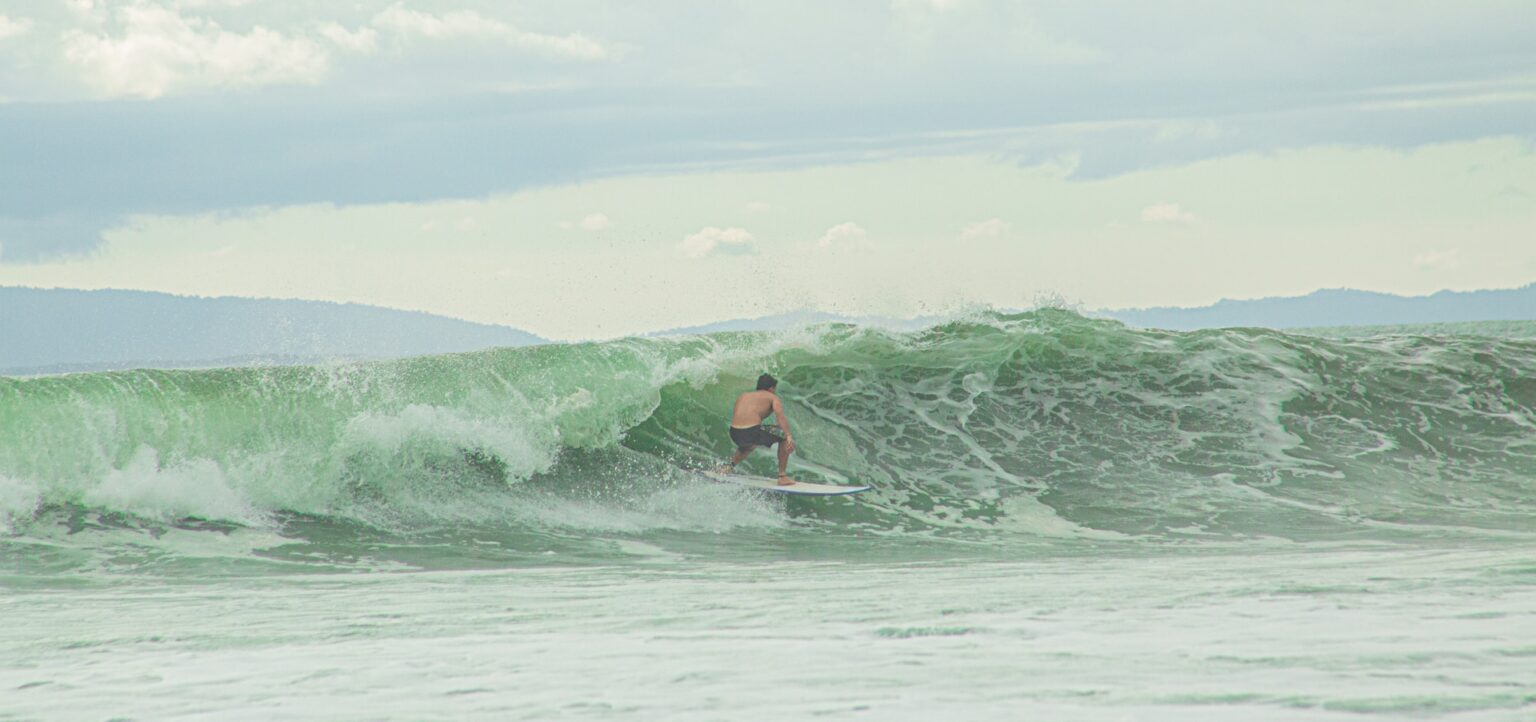
The vibe is end of the road. It’s a quiet, rustic village where the pace of life is dictated by the tide charts. While it lacks the glitz of the northern surf towns, it offers a connection to nature. It is a dream for goofy-footers, and a challenge for regular-footers, who want to test their endurance on mechanical, peeling walls. While the point is the main draw, the surrounding area is packed with hidden gems and wildlife, from scarlet macaws flying overhead to monkeys swinging through the canopy. It is a soulful, heavy-hitting destination that rewards the long journey with the ride of a lifetime.
Best Season to Surf in Pavones
The prime time for Pavones is from April to October. This is when the South Pacific awakens, sending massive S/SW groundswells straight into the mouth of the Golfo Dulce. For the point to really connect and offer those legendary minute-long rides, you need a solid swell.
During the Dry Season, November to March, the surf is much smaller and more inconsistent. This is actually a great time for beginners or those looking for a mellow tropical vacation, as the weather is flawless and the water is crystal clear.
The best overall window is May through August. The swells are at their most frequent, and although it’s the rainy season, the mornings are often glassy and perfect. Just be prepared for tropical downpours in the afternoons that turn the jungle into a vibrant, emerald paradise.
Surf Spots
Pavones (The Point)
The undisputed king of lefts. When a big S/SW swell hits, this wave can peel for over 900 meters, connecting three different sections into one leg-burning ride. It breaks over a mix of sand and smooth boulders. It’s best at mid-to-high tide to cover the rocks, offering a fast, rippable face that just keeps going.
Punta Banco
Located about 4km south of Pavones, this is a series of reef and beach breaks. It’s much more exposed than the main point, meaning it catches smaller swells that Pavones might miss. It offers both lefts and rights and is usually far less crowded, making it a great alternative on smaller days.
Rio Macho
Found between Pavones and Punta Banco, this spot breaks near a river mouth. It’s a punchy, fun wave that works well when the main point is looking a bit soft. It offers a more beach break feel with shifting peaks, providing a nice change of pace from the mechanical lines of the point.
Matapalo
The next closest surf town is Matapalo, which is a swim, or more properly a 30 minute boat taxi, across the channel. If you want to learn more about Matapalo check out my Surfing in Matapalo guide.
Surf Camp and Lessons
Una Ola is a staple in the Pavones community, offering everything from beginner packages to high-performance coaching. They specialize in all-inclusive retreats that handle the logistics of this remote area, including guided boat trips to the Osa Peninsula. Their instructors know the nuances of the point perfectly, helping you time the sections so you don’t get “left” behind.
How to Get to Pavones
Getting to Pavones is an adventure in itself. From San José (SJO), you have two main options:
- The Drive: A 7-to-8-hour journey through some of the most beautiful scenery in Costa Rica. A 4×4 is highly recommended, especially in the rainy season when the gravel roads can get muddy.
- The Flight: Take a domestic flight (Sansa) to Golfito. From Golfito, it’s a 1.5-to-2-hour taxi or bus ride south to Pavones. This saves you a full day of driving and is the preferred choice for most surfers.
General Costs and Considerations
Pavones is more expensive than the east of El Salvador but still manageable. Budget around $50–$80 a day for food and basic expenses. While many places take cards, there are no ATMs in Pavones. You must withdraw enough Colones or Dollars in Golfito or Rio Claro before you arrive.
Travel Advisories
The area is very safe, but the environment is powerful. The rock dance at Pavones is legendary, the boulders are slippery and can be sharp, so booties are a smart move for your first few sessions. The sun is punishingly strong, so high-zinc sunscreen is a requirement. Also, keep an eye out for stray logs in the water after heavy rains, as the river mouths often wash debris into the lineup.
Other Things to Do in Pavones
- Food: You have to try the Chifrijo (a bowl of rice, beans, pork, and pico de gallo) at a local soda. It’s the ultimate post-surf protein hit.
- Location to Hike: Explore the trails around Punta Banco. There are stunning waterfalls tucked into the jungle just a short hike from the beach where you can cool off in freshwater pools.
- Cultural Thing: Take a boat tour of the Golfo Dulce. It’s one of the few places on earth where you can see both Northern and Southern Hemisphere humpback whales during their respective seasons.
Conclusion on Pavones
Pavones is a pilgrimage for every serious surfer. It requires effort to reach, but the reward is a wave that redefines what a long ride actually means. Whether you are carving up the main point or exploring the empty reefs of Punta Banco, the energy of the deep south is intoxicating. It is a raw, beautiful, and world-class destination that is absolutely worth sending it for a session.
Pavones: Frequently Asked Questions
Languages Spoken
Spanish is the primary language. English is widely understood in the immediate surf community, hotels, and restaurants, though Pavones has a more “local” feel than larger hubs.
Water Temperature & Gear
The water is consistently warm, averaging 28°C (82°F).
- Wetsuit: Not needed at any time of year.
- Must-Have: A rash guard is essential for the long paddles and protection from the intense sun.
Currency & Payments
US Dollars (USD) and Colones (CRC) are both accepted.
- Cash: Critical. Many small businesses in Pavones are cash-only.
- ATMs: There are very few ATMs in Pavones and they often run out of cash. Withdraw everything you need in Golfito or Paso Canoas before arriving.
- Cards: Accepted at larger hotels and some established restaurants, but never rely on them solely.
Other Blogs on Costa Rica
I have written exstensively about Costa Rica, if you are interested in learning more about all the spots and towns to surf in, check out my master blog post Surfing in Costa Rica.