Surfing in Costa Rica: A Surf Travel Guide
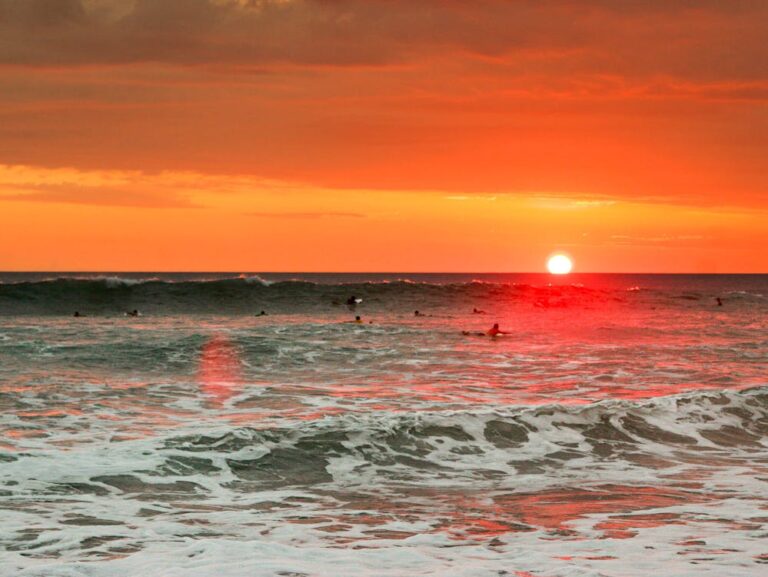
Costa Rica is one of the top countries, and locations for surfing, and that goes for beginners to experts. Consistent waves year-round, warm water, and good cultural vibes make it a genuine surfing paradise. The geographical setup of Costa Rica means that you choose between surfing on the Pacific or the Caribbean coasts, in famous locations such as Nosara, Tamarindo, Jaco, Puerto Viejo, and Pavones. So, with this in mind, its only right to do a travel guide, and help those that want to start surfing, get better at surfing, or those that just want to enjoy their already acquired skills navigate Costa Rica.
Best Season to Surf Costa Rica
Pacific Coast
As I will outline in a little, there is an immense amount of locations to surf in Costa Rica, and many locations have beginner friendly waves year round.
For that reason the true recommended surf season, for the Pacific side, is their dry season, which is December to April. This dry season brings sunny days, blue skies, glassy mornings, and many times offshore winds. So for beginners, this is the ultimate conditions, and if you line-up a large swell as an expert, it could be as well.
May to November, the Green Season, is marked by less desirable conditions weather wise, but more powerful waves. Large southswells come up and bring the power to make some of the most desirable waves chased after.
Caribbean Coast
The Caribbean coast functions a differen’t than the pacific. As the swells are a little more spotty on this side of the country, it is advised to surf from December to March. These months bring the peak activity from the Atlantic Ocean. Although the waves come the Atlantic, you can still expect the better, drier weather that the Caribbean coastline provides.
Guide to Regions
Costa Rica has a diverse geographical landscape, and is quite long compared to many other countries. It has approximately 1,300 kilometers (800miles) of coastline, which is extensive. Designated by the government, you have three official provinces that have surfable terrain, which are Guanacaste and Puntarenas on the Pacific side, and Limon on the Carribean side. Yet, its more extensive and broken down than those three regions, which is why were breaking down the main locations to visit for surfing below.
Guanacaste Coast
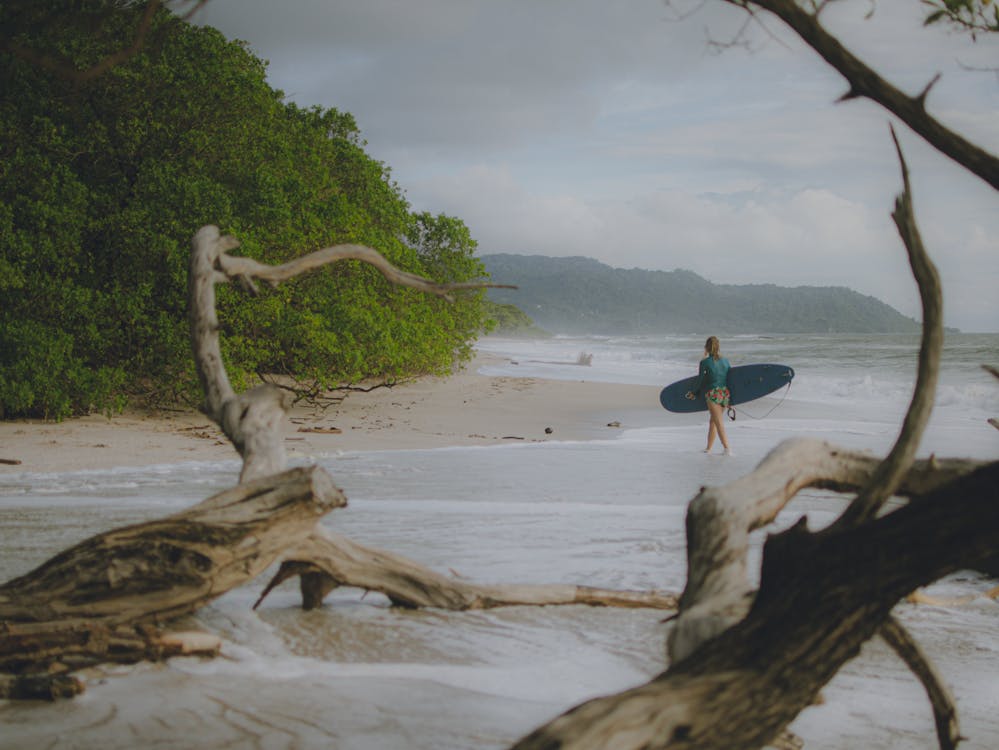
Surfer walking on a beach in Tamarindo
Often referred to as the “Gold Coast,” this region is famous for its consistent offshore winds (the Papagayos) and diverse range of breaks that work well for everyone from first-timers to pros.
Witch’s Rock (Roca Bruja) – Accessible primarily by boat from Playas del Coco or Tamarindo, this world-class beach break is famous for its hollow barrels and the iconic rock sitting offshore.
Playa Grande – A highly consistent beach break located just north of Tamarindo. It offers punchy peaks and is generally much less crowded than its neighbor.
Tamarindo – The bustling hub of Guanacaste surf. It’s the ultimate “learn-to-surf” destination with gentle waves, though more advanced offer fun for the experienced.
Avellanas – Known as “Little Hawaii,” it boasts several distinct peaks, including the famous “Lola’s” and a river mouth that produces world-class rights.
Marbella – A bit further south, this is a heavy, powerful beach break known for its consistency and hollow barrels. It’s a “pro-level” spot that stays offshore most of the day.
Nicoya Peninsula
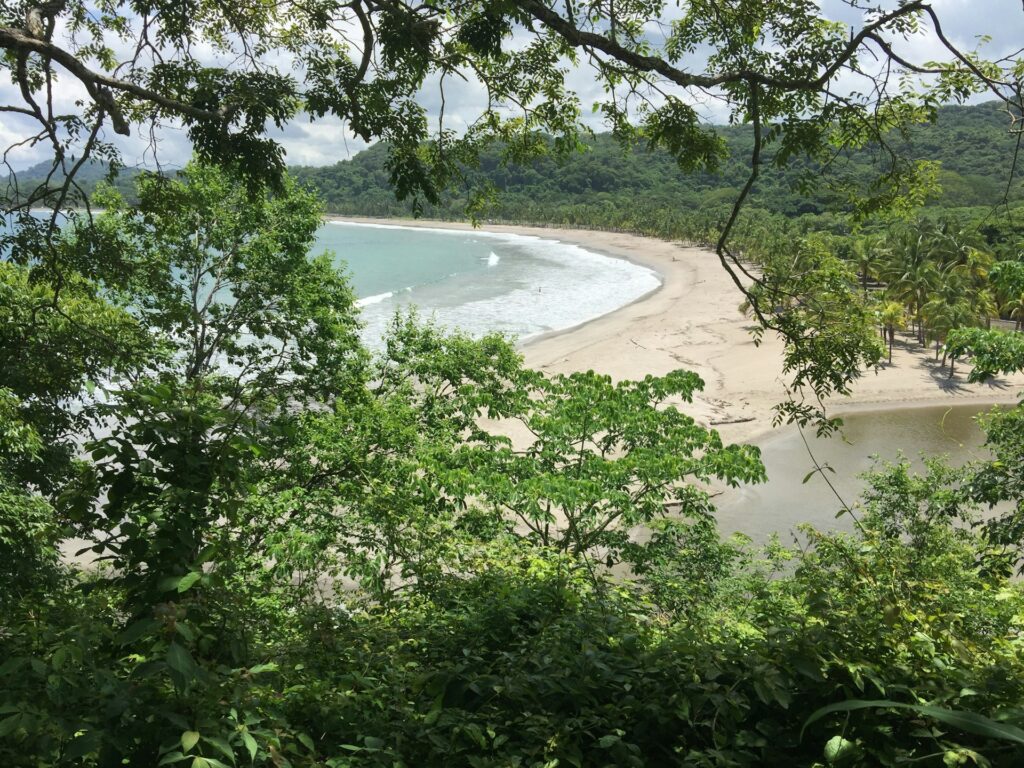
A scenic beach a little bit below Samara, Costa Rica.
This region offers a more bohemian, “Pura Vida” vibe. The surf here is incredibly consistent, with the coastline perfectly positioned to capture almost any swell energy and good vibes.
Nosara – The crown jewel of consistency. Guiones is a massive beach break that works on all tides and offers long, peeling rides that are a favorite for longboarders and intermediates.
Playa Guiones – Interchangeable with Nosara, although just the specific town of what the broader are of Nosara would be considered.
Samara – A protected bay that is arguably the safest place in the country to learn. The waves are gentle and small, perfect for your very first day on a board.
Santa Teresa – An international surf mecca. It features powerful, hollow beach breaks that attract top-tier talent, though it has sections suitable for all levels.
Montezuma – Located on the “inside” of the peninsula, it requires a larger swell to wrap around the point, but when it’s on, it offers beautiful, scenic breaks in a lush jungle setting.
Central Pacific (Northern/Central Puntarenas)
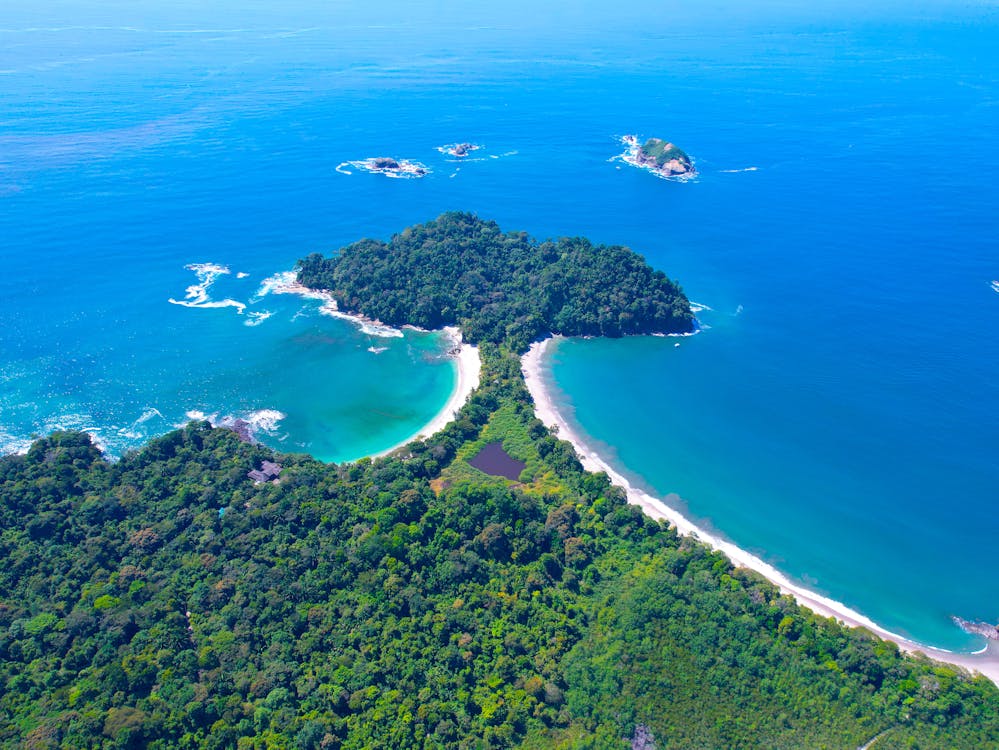
Bird’s-eye view of Manuel Antonio coastline, Costa Rica.
This region is the most accessible from San Jose. It features a mix of heavy competitive beach breaks and scenic, long-riding waves tucked into tropical forests.
Jaco – The most accessible surf town from the capital. It’s a reliable beach break that is great for beginners at low tide and gets much punchier as the tide fills in.
Playa Esterillos – Divided into West, Central, and East, this long stretch of coast offers everything from mellow longboard waves to heavy, hollow shore-breaks.
Espadilla Beach (Manuel Antonio) – A stunning beach located right next to the National Park. It’s generally a mellow beach break, ideal for beginners and intermediates looking for a scenic session.
Dominical – Known as one of the most powerful beach breaks in Costa Rica. It is incredibly consistent and can hold significant size, making it a favorite for advanced surfers.
Uvita – Home to the “Whale’s Tail,” this area offers several mellow beach breaks and some fun reef points that work best on mid-to-high tides.
Osa Peninsula (Southern Puntarenas)
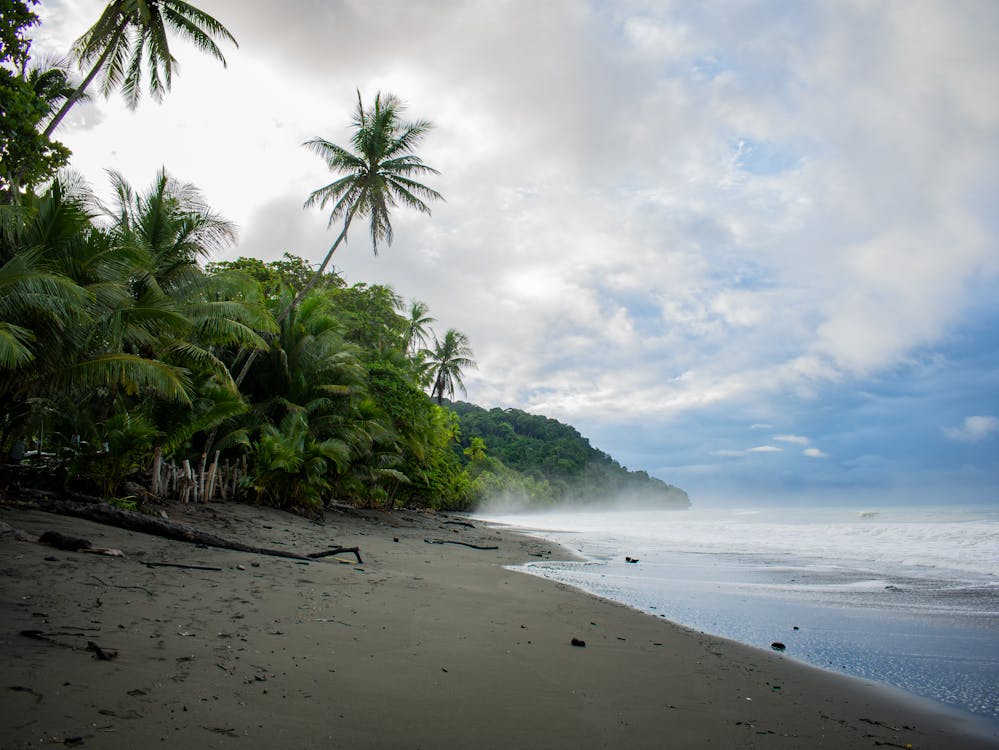
A scenic showcase of the Pavones coastline located within the Osa Peninsula.
The Osa Peninsula stand in contrast to lots of the other parts of Costa Rica, due to its exclusivity. Its quite the huck to travel all the way down their, although the opportunities to score waves is certainly worth it. These are the spots;
Pavones – Not much introduction needed. One of the most famous waves in the world, and its left-handed point break lives up to its famousness.
Cabo Matapalo – A good mix of everything. Waves, lifestyle, hotels, and everything. Just a less-crowded option.
Caribbean Coast
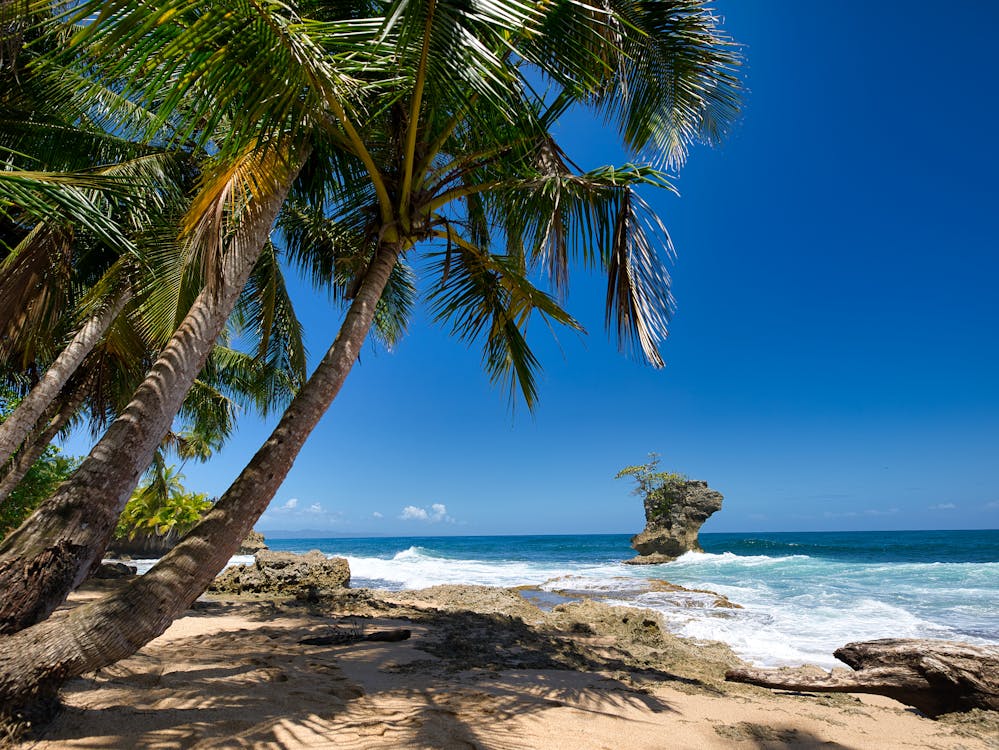
The Limón coastline of the Caribbean side of Costa Rica
The Carribean Coastline is much less adventured and discovered, comparatively than the Pacific coastline. The beaches tend to be a tad more rocky, and protected from reef’s a bit off the coastline. Waves are typically more fickle, although opportunities to score are certainly possible. You can check out some of our guides to the prominent surf locations for the Caribbean below;
Puerto Viejo – The main surf town on the Caribbean coastline. Has the famous wave Salsa Brava their, alongside it is close to Playa Cocles which is fantastic for beginners and all the way up.
Playa Cocles – A beginner orientated wave, that has the capability for advanced surfers as well. Located near Puerto Viejo.
Cahuita – A bit more northern than Puerto Viejo, yet has some fantastic beach breaks that offer a great experience for those of all levels depending on the swell.
Conclusions on Surfing in Costa Rica
Practically, any of the above locations, guarantees a stellar session to happen. Each of the above guides will have a helpful guide to getting to said location, what to expect, costs, and everything else important. So, I hope that when it comes to the life you live and the opportunities presented, you save a couple bucks, buy the ticket, and take the flight in the hope of catching that perfect Costa Rican session.