Surfing in Portstewart: An Irish Surf Scene Travel Guide
Introduction to Surfing Portstewart
Portstewart is a magnificent coastal town on the Causeway Coast of Northern Ireland, where the sophisticated charm of a Victorian seaside resort meets the raw, rhythmic energy of the North Atlantic. Known for its sweeping two-mile crescent of golden sand and towering dunes, this destination offers a high-energy surfing environment that is both world-class and breathtakingly scenic. For surfers, Portstewart provides an incredible sense of freedom, characterized by its consistent beach peaks and the powerful pulses that roll in toward the mouth of the River Bann. Surfing here is a cinematic experience; the ocean meets a landscape of rugged headlands, championship golf links, and the distant silhouette of the Donegal mountains, offering a refreshing and powerful pulse that is synonymous with the North Coast. With its professional surf infrastructure and a community that thrives on the adventurous spirit of the Atlantic, Portstewart serves as a premier gateway for those seeking an authentic and high-quality surf holiday in a setting of profound natural beauty and Irish maritime energy.
Portstewart is the definitive choice for surfers seeking consistent pulses, a lively and authentic coastal atmosphere, and professional surf coaching in a landscape of vast sandy beaches and legendary Northern Irish scenery.
Best Season to Surf Portstewart
- The High Swell Season: May to October. This period experiences the strongest ocean energy. The waves are large and provide long rides through sections that can become hollow. The landscape is vibrant and green during these months, and the ocean is typically smooth in the early mornings.
- Beginner Recommendation – The Dry Season: December to April. This is the ideal time for organized conditions and more manageable waves. The offshore winds are constant and the weather remains clear for long periods. It is an excellent season for intermediate surfers to practice on the beach breaks.
- General Recommendation – The Transition Months: April and November. These months provide a useful combination of good waves and pleasant weather. You can often experience the first significant swells of the year while enjoying sunny conditions.
Surf Spots and Beaches in Portstewart
Portstewart Strand
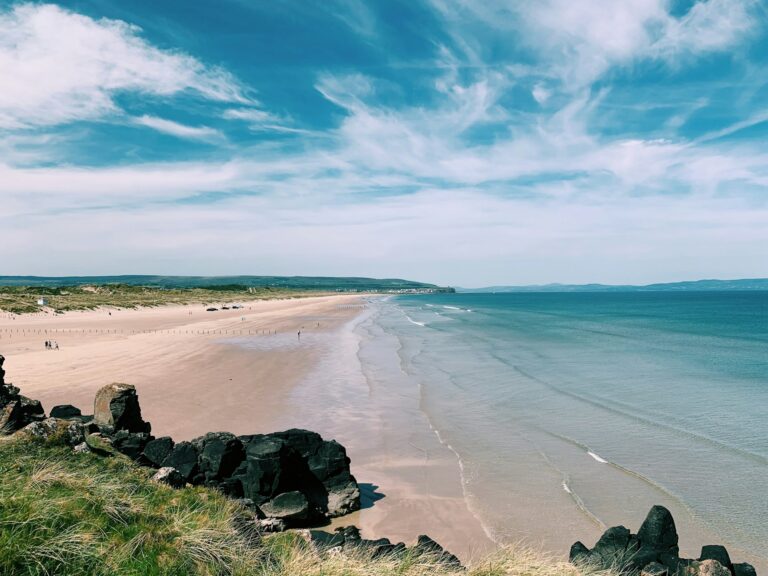
The surfing in Portstewart is centered on its expansive Blue Flag shoreline, which acts as a reliable swell magnet for the Causeway Coast. This spot features a versatile sandy bottom with multiple left and right-hand peaks that work well across various stages of the tide, though it is particularly favored at mid-to-high tide. Because of its orientation and the protection offered by the surrounding headlands, the Strand often produces clean, organized pulses that are ideal for technical progression and longboarding. On a clean day with a southerly offshore wind, the beach produces punchy sections and smooth rides in a world-class environment. The wide-open nature of the bay and the impressive dune system, managed by the National Trust, ensure every session feels connected to the unique natural balance of the coast.
A high-energy Atlantic beach where the golden sands and consistent pulses from the sea create a world-class environment for every session along the Portstewart coastline.
Surf Lessons and Camps
Sub6 Life
Sub6 Life is a premier center for instruction and adventure at Portstewart Strand, dedicated to sharing a passion for the Atlantic through a professional and technical lens. Their team of certified instructors offers a range of lessons designed for all ages and skill levels, focusing on providing a solid foundation in surfing and ocean awareness. By emphasizing technical progression and a deep respect for the local maritime environment, they provide an authentic gateway to the waves, helping every student build confidence while enjoying the adventurous spirit of the North Coast.
Other Things to Do in Portstewart
- Giant’s Causeway: Take a short drive to explore this world-famous UNESCO World Heritage site, featuring 40,000 interlocking basalt columns.
- Portstewart Promenade: Walk the vibrant seafront to enjoy artisanal ice cream, boutiques, and the town’s lively maritime atmosphere.
- Dunluce Castle: Discover the dramatic ruins of this medieval castle perched on the edge of a basalt outcropping nearby.
- Mussenden Temple: Visit the iconic cliff-top temple at Downhill Demesne for breathtaking views over the mouth of the Foyle.
- Local Gastronomy: Savor fresh local seafood or award-winning coffee at the various beachfront restaurants and historic cafes after your surf.
Conclusion on Surfing Portstewart
Portstewart offers a quintessential Irish surf experience, balancing consistent Atlantic wave energy with the serene beauty of the Causeway Coast. The reliability of the sandbanks at the Strand and the professional, adventure-driven expertise of schools like Sub6 Life make it a premier destination for those seeking quality waves in an authentic and world-class setting.
Whether you are carving through a clean morning pulse or watching the sun set over the Donegal hills after a session, Portstewart provides a profound connection to the sea and the adventurous spirit of Irish surf travel.
FAQ: Surf Travel to Portstewart
Is Portstewart Strand suitable for beginners?
Yes, the wide sandy beach and the availability of expert coaching make it one of the most accessible and safest places in Northern Ireland to learn to surf.
What is the water temperature?
In summer, the water ranges from 13°C to 16°C (55-61°F). In winter, it drops to around 7°C to 9°C (45-48°F). A 4/3mm wetsuit is ideal for summer, while a 5/4mm with boots and gloves is essential for winter.
How do I get there?
Portstewart is located on the North Coast, about an hour and 15 minutes from Belfast. It is easily accessible by car, and you can even drive onto the beach in designated National Trust areas.
Is the beach crowded?
While the Strand is a popular destination, its two-mile length ensures that surfers can almost always find a peak with plenty of space, even on busy weekends.
Can I surf at low tide?
Conditions are tide-dependent. While it can be surfed at various stages, mid-to-high tide often provides the best shape as the waves move over the primary sandbanks.
Are there other locations to do a Surf Camp or take a lesson in Ireland?
Check out our Surfing in Ireland guide if you are interested in learning about more areas.